
Roman Catholic Spiritual Direction

Category: Holy Spirit

301. The Church Gets Going (John 20:19-31)

Posted on May 23rd, 2012 by Father John Bartunek

“Christ who is God, supreme over all, has arranged to wash man clean of sin and to make our old nature new.”
- St. Hippolytus

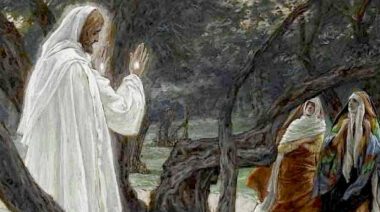
John 20:19-31: In the evening of that same day, the first day of the week, the doors were closed in the room where the disciples were, for fear of the Jews. Jesus came and stood among them. He said to them, ‘Peace be with you’, and showed them his hands and his side. The disciples were filled with joy when they saw the Lord, and he said to them again, ‘Peace be with you. ‘As the Father sent me, so am I sending you.’ After saying this he breathed on them and said: ‘Receive the Holy Spirit. For those whose sins you forgive, they are forgiven; for those whose sins you retain, they are retained.’ Thomas, called the Twin, who was one of the Twelve, was not with them when Jesus came. When the disciples said, ‘We have seen the Lord’, he answered, ‘Unless I see the holes that the nails made in his hands and can put my finger into the holes they made, and unless I can put my hand into his side, I refuse to believe’. Eight days later the disciples were in the house again and Thomas was with them. The doors were closed, but Jesus came in and stood among them. ‘Peace be with you’ he said. Then he spoke to Thomas, ‘Put your finger here; look, here are my hands. Give me your hand; put it into my side. Doubt no longer but believe.’ Thomas replied, ‘My Lord and my God!’ Jesus said to him: ‘You believe because you can see me. Happy are those who have not seen and yet believe.’ There were many other signs that Jesus worked and the disciples saw, but they are not recorded in this book. These are recorded so that you may believe that Jesus is the Christ, the Son of God, and that believing this you may have life through his name.

Christ the Lord  We call St. Thomas the Apostle “doubting Thomas”; we may be off the mark in doing so. Jesus did not ask the other apostles to believe in his resurrection without showing them the wounds in his hands and sides. Thomas was merely demanding his rights as an apostle when he demanded the same privilege. And none of the others responded to the risen Christ with a faith as complete and firm as Thomas’: “My Lord and my God!” Thomas knew what this meant. He knew that if Christ has come back from the dead, then everything he said about himself, everything he claimed to be, was true. Jesus blessed him for his faith.

Our faith, and the faith of all Christians throughout the centuries, is built upon the solid foundation of the apostles’ testimony to the risen Christ, a testimony validated by twenty uninterrupted centuries of Church life, of saints and martyrs, of sacraments, Liturgy, and a college of bishops that links us directly, even physically, to that little group of frightened apostles who encountered the Risen One. Blessed indeed are we who have believed: although we have not seen Christ in the flesh, we have seen, experienced, and benefited from the undeniable work of his Spirit. In times of darkness and doubt, we know where to look to recover the light.

At the beginning of creation, “the earth was a formless wasteland, and darkness covered the abyss, while a mighty wind swept over the waters.” (Genesis 1:2) When God created man and woman, he “formed man out of the clay of the ground and blew into his nostrils the breath of life, and so man became a living being.” The word for “wind” in Hebrew (and in Greek, the language of the New Testament) is the same as the word for “breath” and “Spirit.” Thus, when St. John points out the detail of Jesus breathing on the disciples as he gives them the gifts of the Holy Spirit and the commission to carry on his work of evangelization, he is calling to mind the “wind” and the “breathing” of the first creation. The Fathers of the Church understood this first post-Resurrection appearance to the apostles as the start of a new creation. Jesus has won the forgiveness of sin, which marred the first creation, and dubs his apostles messengers and distributors of this forgiveness. As they spread it throughout the world and build up the Church, all mankind is to be renewed, elevated to a more sublime intimacy with God. As St. Paul put it, “So whoever is in Christ is a new creation: the old things have passed away; behold, new things have come.” (2 Corinthians 5:17)

Christ the Teacher  Jesus Christ is the only Savior, the only Mediator between sinful, fallen mankind and the one God who can give them eternal life. He achieved his mediation by his loving obedience to God’s will even through humiliation, torture, and death on a cross. This obedience reversed the disobedience of Adam, and reestablished communion between God and men; it opened once again the flow of God’s grace. In his first appearance to the confused group of apostles on the first Easter, he teaches us how he wants that flow of grace to irrigate the human family: through the ministry of the Church guided by the Twelve Apostles. He bequeathed his peace to them; he sent them on a mission just as his Father had sent him; he breathed his Spirit into them; he transferred to them his divine power of absolving from sin, the very thing that obstructs our communion with God. Do we wish to find Easter joy, won for us at such a terrible price? We need only dip into the flowing fountain of God’s grace, which is his one, holy, Catholic, and apostolic Church.

At the beginning of his Gospel, St. Matthew told us why Jesus came among us: “He will save his people from their sins.” (Matthew 1:21) In this first meeting with his apostles after his atoning sacrifice on the cross, Christ eagerly begins the fulfillment of that mission. His first post-resurrection deed is to “breathe” on the Twelve, inaugurating as it were a new creation (God had “breathed” into Adam’s nostrils to give him life at the first creation), one that will rise up from the first creation that had been so disfigured by sin. And with that breath, he delegates to them his power to wipe sins away, to administer the forgiveness from sin that he won through his self-oblation on Calvary. Ever since, that ministry has been carried our through the sacrament of confession. How eager Christ was to grant this surpassing grace to his Church! How close it must be to his heart if it was one of the first things he did after coming back from the dead! If he cares about it that much, then so should we.

Often we look for extraordinary and emotional encounters with the Holy Spirit. Sometimes we think that unless we experience a special feeling or perceive a supernatural phenomenon, the Holy Spirit is not at work. Yet, Jesus shows us that the primary mode of operation followed by the Holy Spirit is the same one he followed in his Incarnation: he turns normal realities into vehicles of grace. The Holy Spirit acts in our lives powerfully through the sacraments of the Church, through the preaching and teaching of the Church’s ministers, and through our own prayer and reflection on the Scriptures. If we are ready to find the Holy Spirit in these ordinary channels that Christ has established, he will readily fill our lives with the extraordinary fruits of his action.

Christ the Friend  St. John tells us why he wrote his Gospel: he wants us to believe in Jesus Christ, so that we may “have life through his name.” Life. We cherish life, and yet we sense that there is more to it than the limited version we experience. Our hearts seem unsatisfied even by all that life offers us. We always want more. God made us like that. He made us thirsty for a happiness that only he can give, in order to make sure that we would seek him. Our life is a quest for Jesus Christ, a quest of which he is the author, the companion, and the end. He wants to give us what we most want; he asks only that we believe in him, that we trust and follow him.

Thomas: When Jesus turned to me and told me to touch his wounds, his eyes were merry. I had been stunned when he appeared, but then I felt ashamed when he made reference to my earlier comments. But his eyes were so bright, so inviting, that I stepped forward. He held out his hands, those same hands that had cured so many sick and crippled people, those strong, carpenter’s hands that had multiplied the loaves and commanded the sea. He held them out to me. They were pierced through, but he was smiling. I looked at them. They were wounded hands; I held them, and I felt the wounds. Then he took my left hand and brought it to his side. He was really there. The Lord had returned – the same Lord. It was no ghost, no vision. It was the Lord, the Teacher. And I looked back into his eyes, and it was as if I had seen him for the first time. That’s when I knew. I knew in an instant that it was true, that he was not simply a rabbi, a prophet, or a king. I knew that he was Yahweh himself. Yahweh himself had come to visit his people, to save them. I fell on my knees. I cried with joy. Emmanuel! Really, truly… The New Covenant had finally come.

Christ in My Life  Why don’t I trust you more? If you were to let me see the wounds in your hands and feet and sides, would that be any more evidence than you have already given me of your greatness, your goodness, your presence, and the transforming power of your love? Lord Jesus, I want you to be in the center of my life. You are God, and you know my name, and you call to me. I want to hear you, Lord…

How passionately I should love your Church! It is your chosen instrument for reaching out and touching each one of your beloved brothers and sisters everywhere in the world. How would I have found you if it were not for your Church? Bless your Church, Lord. Make it grow, make it flourish; fill it with saints. Teach me to be a joyful, faithful child of the Church. To build it up right here, right now…

I have tasted the life you have in store for me. I know the difference you have made in my life. I know that I need your grace, and I know where to find it and how to cooperate with it: by seeking out and fulfilling your will. But what about all the people in the world who don’t know what a difference you can make, who don’t know where to find the grace they thirst for? Make me a channel of your peace…


PS: This is just one of 303 units of Fr. John’s fantastic book The Better Part. To learn more about The Better Part or to purchase in print, Kindle or iPhone editions, click here. Also, please help us get these resources to people who do not have the funds or ability to acquire them by clicking here.

Does the Holy Spirit work in the un-baptized?

Posted on July 19th, 2010 by Father John Bartunek

Q: Dear Father John, I thought I understood, more or less, how the Holy Spirit works in our lives. But in a recent faith sharing group, a question came up that made me wonder. Someone asked if the Holy Spirit would or would not be with un-baptized persons if they ask Holy Spirit to dwell in them or to give them fortitude in a difficult situation. This came up while we were discussing how God’s grace can touch the lives of those who have never even heard of Jesus. I was hoping you could shed some light on this for me.

A: I am glad you asked this question. It reminds us that the vast treasure of theological reflection that our Church has accumulated through the centuries isn’t just irrelevant abstraction. It has grown up organically, in order to help us understand better and better how God works, so that we can cooperate with him more and more effectively.

In the first place, remember that God is not limited to working through the sacraments. Therefore, he can make saints without them if he so pleases; he can pour his grace into souls however and whenever he sees fit. At the same time, however, he himself established the sacraments as the normal, ordinary way to communicate his grace. For us to belittle them or treat them as optional, therefore, is presumptuous. He established them because in his wisdom he knows that human nature always experiences and expresses spiritual realities through material realities. And so, something real changes in our souls at baptism: God comes to dwell in us, adopts us, and actually alters (elevates) our souls at a deep, ontological level. In other words, it is not indifferent whether or not someone gets baptized.

“Types” of Baptism

The Church has long pointed out, however, that this grace of baptism can come in three ways: through the validly administered sacrament of baptism; through baptism by blood; and baptism of desire.

  • Baptism of blood refers to the martyrdom of someone who dies for the Christian faith before actually receiving the sacrament of baptism. In this case, the effects of martyrdom include some of the effects of baptism: the complete remission of sin and the privilege of immediate entrance into heaven. This concept of baptism of blood came into focus during the first centuries of the Church’s existence. During the many waves of Roman persecution, men and women who were still only catechumens (receiving instruction in the faith and preparing for baptism), and pagans who suddenly converted to the faith (for example, upon seeing the heroic courage of a martyr) were often executed along with baptized Christians.
  • Baptism of desire is a bit different, a bit more mysterious. It too is the equivalent of sacramental baptism, and therefore sufficient for obtaining the state of grace and the promise of salvation. Yet the circumstances by which it comes to pass or known only to God. Here’s how the Second Vatican Council explained it: “Those who through no fault of their own, do not know the Gospel of Christ or His Church, but who nevertheless seek God with a sincere heart, and, moved by grace, try in their actions to do His will as they know it through the dictate of their conscience – those too may achieve eternal salvation” (Constitution on the Church, I, 16).

As you can see, we simply cannot fathom all the wonderful ways in which God works in the souls of us sinners. God’s action is so rich!

The “Types” of Grace

As regards your specific question, about someone who is not baptized asking for help from the Holy Spirit, it may be useful to recall the different types of grace.

  • There is sanctifying grace (the state of being in friendship with Christ, of being an adopted child of God, of having been redeemed from original sin). This is introduced into our lives at baptism, and it is increased, or deepened, through prayer, fidelity to God’s will, and the other sacraments.
  • There is also sacramental grace, a specific strengthening or benefit unique to each sacrament. For example, the sacramental grace of confession is the forgiveness of personal sins and the strengthening of our will towards future fidelity. The sacramental grace of marriage is the marriage bond which helps both spouses grow in communion with God through living their communion with each other, etc.
  • Then there is what is commonly referred to as actual grace. This is a boost of supernatural help that comes to assist us in a specific situation. When we talk about “graces,” this is usually what we mean – a light from the Holy Spirit, an added dose of patience when I really needed it… These actual graces are distinct from sanctifying grace. So, when non-baptized persons, who probably don’t have sanctifying grace, ask for help from the Holy Spirit, they are asking for this kind of grace, actual grace. And God is always ready to give actual graces, even when we don’t ask, to draw us closer to him.

These distinctions may seem persnickety. But let’s not lose sight of the forest for the trees. Reflecting on the many ways in which God reaches out to us and stays involved in our lives reminds of the most important thing: that he is our Father, passionately interested in the smallest details of our little, limited world.

Yours in Christ, Father John Bartunek, LC, ThD

Does the Holy Spirit work with those outside of the Church?

Posted on July 27th, 2009 by Father John Bartunek

HolySpirit-with-TrinityQ: Dear Father John, I thought I understood, more or less, how the Holy Spirit works in our lives. But in a recent faith sharing group, a question came up that made me wonder. Someone asked if the Holy Spirit would or would not be with un-baptized persons if they ask Holy Spirit to dwell in them or to give them fortitude in a difficult situation. This came up while we were discussing how God’s grace can touch the lives of those who have never even heard of Jesus. I was hoping you could shed some light on this for me.

A: I am glad you asked this question. It reminds us that the vast treasure of theological reflection that our Church has accumulated through the centuries isn’t just irrelevant abstraction. It has grown up organically, in order to help us understand better and better how God works, so that we can cooperate with him more and more effectively.

In the first place, remember that God is not limited to working through the sacraments. Therefore, he can make saints without them if he so pleases; he can pour his grace into souls however and whenever he sees fit. At the same time, however, he himself established the sacraments as the normal, ordinary way to communicate his grace. For us to belittle them or treat them as optional, therefore, is presumptuous. He established them because in his wisdom he knows that human nature always experiences and expresses spiritual realities through material realities. And so, something real changes in our souls at baptism: God comes to dwell in us, adopts us, and actually alters (elevates) our souls at a deep, ontological level. In other words, it is not indifferent whether or not someone gets baptized.

“Types” of Baptism

The Church has long pointed out, however, that this grace of baptism can come in three ways: through the validly administered sacrament of baptism; through baptism by blood; and baptism of desire.

  • Baptism of blood refers to the martyrdom of someone who dies for the Christian faith before actually receiving the sacrament of baptism. In this case, the effects of martyrdom include some of the effects of baptism: the complete remission of sin and the privilege of immediate entrance into heaven. This concept of baptism of blood came into focus during the first centuries of the Church’s existence. During the many waves of Roman persecution, men and women who were still only catechumens (receiving instruction in the faith and preparing for baptism), and pagans who suddenly converted to the faith (for example, upon seeing the heroic courage of a martyr) were often executed along with baptized Christians.
  • Baptism of desire is a bit different, a bit more mysterious. It too is the equivalent of sacramental baptism, and therefore sufficient for obtaining the state of grace and the promise of salvation. Yet the circumstances by which it comes to pass or known only to God. Here’s how the Second Vatican Council explained it: “Those who through no fault of their own, do not know the Gospel of Christ or His Church, but who nevertheless seek God with a sincere heart, and, moved by grace, try in their actions to do His will as they know it through the dictate of their conscience – those too may achieve eternal salvation” (Constitution on the Church, I, 16).

As you can see, we simply cannot fathom all the wonderful ways in which God works in the souls of us sinners. God’s action is so rich!

The “Types” of Grace

As regards your specific question, about someone who is not baptized asking for help from the Holy Spirit, it may be useful to recall the different types of grace.

  • There is sanctifying grace (the state of being in friendship with Christ, of being an adopted child of God, of having been redeemed from original sin). This is introduced into our lives at baptism, and it is increased, or deepened, through prayer, fidelity to God’s will, and the other sacraments.
  • There is also sacramental grace, a specific strengthening or benefit unique to each sacrament. For example, the sacramental grace of confession is the forgiveness of personal sins and the strengthening of our will towards future fidelity. The sacramental grace of marriage is the marriage bond which helps both spouses grow in communion with God through living their communion with each other, etc.
  • Then there is what is commonly referred to as actual grace. This is a boost of supernatural help that comes to assist us in a specific situation. When we talk about “graces,” this is usually what we mean – a light from the Holy Spirit, an added dose of patience when I really needed it… These actual graces are distinct from sanctifying grace. So, when non-baptized persons, who probably don’t have sanctifying grace, ask for help from the Holy Spirit, they are asking for this kind of grace, actual grace. And God is always ready to give actual graces, even when we don’t ask, to draw us closer to him.

These distinctions may seem persnickety. But let’s not lose sight of the forest for the trees. Reflecting on the many ways in which God reaches out to us and stays involved in our lives reminds of the most important thing: that he is our Father, passionately interested in the smallest details of our little, limited world.

Yours in Christ, Father John Bartunek, LC