
Catholic Spiritual Direction

Category: Hell & Purgatory

A Hellish Backup Plan

Posted on June 3rd, 2010 by Dan Burke

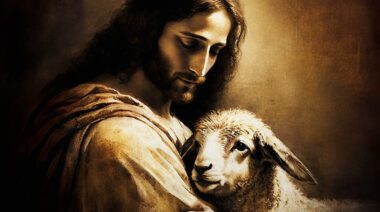
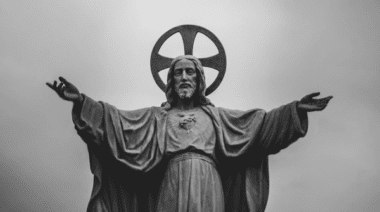
Christ in JudgmentHave you got a backup plan to avoid hell? Some believe they do. They believe that some day they will get around to the all-important task of developing their spiritual lives, but that if they don’t, they are willing and ready to endure the backup plan – purgatory.  This sounds plausible on its face, but what if we miss the mark?  Aiming for purgatory and missing can be a hellish mistake.

Can it be true?  Is there a fiery safety net waiting to purge us of the sloth into which we may have slouched?  I don’t know about you, but even if were true, this doesn’t sound too appealing to me.  Can you imagine standing before God, having chosen not to pursue the holiness he calls us to?  I wonder who would meet us in our final judgment. Would it be Jesus in his bloody crucified body?  If it were, how confident would we be with our mediocrity in the face of all the suffering and love poured out on our behalf?  Would we just shrug our shoulders, say, “sorry” and assume we could raise our pathetic hand and point to door number two (the purgatory door of course).

Would a just God allow such a choice?  Lets look at it another way.  If deliberately choosing to follow Christ down a clear and narrow path of holiness is not our choice in this life, will it suddenly be our choice in death? If Christ says, “take up your cross and follow me” and we shrug our shoulders and wander off, what choice have we really made - already?

So, is it this black and white?  Here’s what Christ said to the Church at Laodice’a, in Revelation chapter 3:

“I know your works: you are neither cold nor hot. Would that you were cold or hot! So, because you are lukewarm, and neither cold nor hot, I will spew you out of my mouth. For you say, I am rich, I have prospered, and I need nothing; not knowing that you are wretched, pitiable, poor, blind, and naked. Therefore I counsel you to buy from me gold refined by fire, that you may be rich, and white garments to clothe you and to keep the shame of your nakedness from being seen, and salve to anoint your eyes, that you may see. Those whom I love, I reprove and chasten; so be zealous and repent.”

And what was Christ’s reply to a man who encountered him during his earthly ministry and indicated he had something very important to do before he could follow Christ to the cross?

“Lord, let me first go and bury my father.” But he (Jesus) said to him, ‘Leave the dead to bury their own dead; but as for you, go and proclaim the kingdom ofGod.’ Another said, ‘I will follow you, Lord; but let me first say farewell to those at my home.’ Jesus said to him, ‘No one who puts his hand to the plow and looks back is fit for the kingdom of God.’ (St. Luke chapter 9)

So, since the beginning, Christ called us to follow him.  From the beginning, there were many who seemed to be willing but ultimately, had more important things to do.  To these, Christ speaks in St. Matthew chapter 7:

“Enter by the narrow gate; for the gate is wide and the way is easy, that leads to destruction, and those who enter by it are many. For the gate is narrow and the way is hard, that leads to life, and those who find it are few….Every tree that does not bear good fruit is cut down and thrown into the fire… Not every one who says to me, ‘Lord, Lord,’ shall enter the kingdom of heaven, but he who does the will of my Father who is in heaven. On that day many will say to me, ‘Lord, Lord, did we not prophesy in your name, and cast out demons in your name, and do many mighty works in your name?’ And then will I declare to them, ‘I never knew you; depart from me, you evildoers.’ Every one then who hears these words of mine and does them will be like a wise man who built his house upon the rock; and the rain fell, and the floods came, and the winds blew and beat upon that house, but it did not fall, because it had been founded on the rock. And every one who hears these words of mine and does not do them will be like a foolish man who built his house upon the sand; and the rain fell, and the floods came, and the winds blew and beat against that house, and it fell; and great was the fall of it.”

The key to understanding these passages is that all that are condemned here are “faithful,” “good,” “religious” people who are already “seeking” or “following” Christ!  They all claim to know God, they are members of a parish, they claim Jesus as their “Lord.”  Some have performed miracles in his name!  What is the issue?!

It is simple really.  The condemned are not pursuing him with all their heart, soul, mind, and strength.  They are holding on to corners of their soul where the cleansing of God is not welcome.  They have left a marker on the narrow path thinking they can return at any time – maybe at the last moment?  In the Great Divorce, C.S. Lewis said of this kind of thinking, “If we insist on keeping Hell (or even earth) we shall not see Heaven; if we accept Heaven we shall not be able to retain even the smallest and most intimate souvenirs of Hell.”

So what of the backup plan?  As we have seen in a cursory review of a few passages, scripture is also clear – the trajectory of your life prior to your judgment will be the trajectory of your soul at your judgmentGod will merely ratify the decision you have already made. “It is given unto man once to die, then comes judgment.” (Hebrews)

In another passage in the Great Divorce, Lewis reiterates, “There are only two kinds of people in the end: those who say to God, ‘Thy will be done,’ and those to whom God says, in the end, ‘Thy will be done.’ All that are in Hell, choose it. Without that self-choice, there could be no Hell.  No soul that seriously and constantly desires joy will ever miss it.  Those who seek find. To those who knock it is opened.”

There is no safety net here, not even a fiery one.

So, do you still think you have a backup plan to avoid hell?  I have a better idea.  Let’s follow Christ with reckless abandon.  Let’s repent and be zealous for him.  Let’s live life, “and that more abundantly” in Him.  Then, when we come face to face, instead of “depart from me,” he will say, “Well done, good and faithful servant… enter into the joy of your master.” (St.Matthew 25)

Seek Him – Find Him – Follow Him

In Christ, Dan

Why would the Church recommend that we meditate on such horrible things as hell and the last judgment?

Posted on January 15th, 2010 by Dan Burke

Q: Dear Father Joseph, why would the Church recommend that we meditate on such horrible things as hell and the last judgment (aren’t there four things.)? Anyway, if there is a benefit to doing such a thing, what would that look like?

A: “The Last Things”, or “Eschatology” is the subject that deals with the ultimate truths of our existence. Often called “The Four Last Things,” the number can vary. They are death, judgment, heaven, and hell, but we can also include purgatory and the final judgment. Some add the resurrection of the body and the end of the present world to complete the picture.

Your comment that they are horrible would apply to hell (at least inasmuch as it is the greatest definitive disaster that could befall man), but I would not qualify the others with the same adjective. Death is not humanly attractive – and our nature shies from it – but it is a necessary step in order to get to heaven. The same can be said of judgment and purgatory. For those in friendship with God, these are not to be feared. Although awe-inspiring and even painful they lead to eternal bliss, and we can consider them as purification for our sins.

I think many avoid these themes because they make us feel our limitedness and our necessary dependence on God. They prick our conscience and shake us out of our comfort zone. Most of all, however, they make us suffer because we often lack faith and trust in God’s love and mercy. We contemplate only our sinfulness and misery and realize that we cannot cause our own salvation. It is a scary thought. We are totally in the hands of God and his compassion. Nothing we can ever do can make us worthy of heaven. It is his gift, his grace (albeit, a grace he offers to all and, once accepted in faith, a grace that we can expand upon and gain merit with).

Contemplation of this nature, based on fear and without faith, is never recommendable. It will do little good; it will only make us agitated and worrisome.

If, on the other hand, we meditate on these realities based on the sureness of God’s love for us, the panorama changes. Death becomes a sacrifice I can present to God just like Jesus did… my last and most profound offering: my life.

The judgment may reveal my sins, but more importantly it will reveal God’s loving care and constant presence in my life – the almost infinite graces he has showered on me and the glories he has worked through me.

Purgatory becomes a place to grow in ardent love for him. I find myself not quite ready, with too many imperfections. I want to cleanse myself and enjoy God fully with no limitations. I “purge” myself; I sacrifice myself as fast as I can so that I can enjoy that final embrace.

Heaven is indescribable. Think of it as the sum of the most intense desires of your heart, all of them, all together. Multiply that by infinity and then grasp it in one act of love that will never pass. It is too hard to find the words.

Hell… definitely not a good subject. But the thought of it can lead us to wake up and shed our spiritual sloth. The children of Fatima were granted a vision of hell from our Lady, and it turned them into ardent apostles of prayer. Christ himself mentions it in the Gospel for those who would rather not take the narrow path but instead choose the wide and easy one. He mentions the fire that is never extinguished and the worm that dies not. This is not just a scare tactic to get us to worry, but as the Catechism says, “a call to the responsibility incumbent upon man to make use of his freedom in view of his eternal destiny… and at the same time, an urgent call to conversion” (CCC, 1036). I think that is the reason we should contemplate the eternal truths: they give meaning to our lives. They get us to pull our heads out of the sand and realize what life is really about and where we are heading. They turn us back to God and teach us to value him and his things above all else. God is not a bookkeeper, keeping track of our faults and sins and waiting for the proper moment to cut us down and cut us off. He is a loving God who loved us so much that he sent us his only Son to show us the way to him. Meditating on the last things enables us to grow in love for him and his mercy.

Finally, it is good to remember that the Fathers of the Church and the Popes have always recommended the awareness of (or the contemplation of) these Last Things. A couple of quotes from John Paul II and Benedict XVI can give us ulterior reasons for this contemplation.

To preach a version of Christianity which benignly ignores, when it does not explicitly deny, that our ultimate hope is the ‘resurrection of the body and life everlasting’ (Symbolum Apostolorum) runs counter to Revelation and the whole of Catholic tradition. More vigorous preaching and catechesis on eschatological themes is needed in order to eliminate confusion regarding the true nature of Christian life and of the Church’s unfailing hope in her Lord who is ‘the resurrection and the life…’

While many prefer to avoid these ultimate questions and some are tempted to think of salvation as a right and as a foregone conclusion, the Church must continue to remind people of the awesome reality of human freedom, the price of salvation (cf. 1Cor. 7: 23) and the riches of divine mercy (cf. Eph. 2: 4). In doing so the Church is defending the worth and dignity of every individual against all efforts to trivialize human existence” (John Paul II to the bishops of the United States on May 28, 1993).

“Unless we take (the eternal truths) into account, we cannot work well for the earth… When one does not know the judgment of God one does not know the possibility of Hell, of the radical and definitive failure of life; one does not know the possibility of and need for purification. Man then fails to work well for the earth because he ultimately loses his criteria, he no longer knows himself – through not knowing God – and destroys the earth” (Benedict XVI to parish priests of Rome on February 7, 2008).

Yours in Christ, Father Joseph Burtka, LC

Spiritual Resolutions for the New Year?

Posted on January 2nd, 2010 by Dan Burke

Well, its that time of year again. New Year’s resolutions abound.

Looking back at last year, did you grow in your faith and holiness? If someone close to you were asked this question about you, would their answer be a resolute “yes!”

If not, do you have a purposeful plan to grow closer to Christ this year? Are you fully prepared to meet God face to face? Do you plan to be?

Not too long ago I attended my brother Shannon’s funeral – he was 35 years old when he died. Before that, I attended my sister Linda’s funeral – she was 32. In between these, my niece Callie was 2 years old when she was ripped from this world. No one saw any of these devastating and sudden losses coming. All three were healthy only hours before. Each of their bodies failed, almost instantly, in different and unexpected ways. Each of them lived as if they had long lives ahead of them. Each of them were wrong. One moment they were healthy, spending time with family, playing, eating, sleeping… and then they were suddenly standing before God.

What did they see? What will you see? When will you find yourself standing before God? In the next ten minutes? The next hour? Tomorrow? Next week? Are you ready?

If not, what will it take for you to get ready? Is there really anything more important than being ready? Is there really anything more important than where you will spend eternity once this very brief life has passed? Have you considered that even if you live to be a hundred, in contrast with eternity, one hundred years is like a grain of sand on the sea shore.

Each minute you chose the trajectory of your soul. Each minute you decide what God will ratify if you end up standing before him in the next. What is your chosen trajectory? What if you think it is heaven when it really is not? If you are committed to your Catholic faith, can you clearly articulate the criteria upon which you will be judged according to the teachings of Christ and his Church? Could you show someone where your views are justified in the Catechism or scripture? Are you really as ready as you can be, or do you just hope that you are?

My hope and prayer is that this moment, in this new year, you are as ready as you can be. If you are not, my prayer is that you will move spiritual growth to the top of your New Year’s resolution list, get a clear plan in place, and quickly begin aggressively pursuing your relationship with Christ and his Church.

That said, I wish you a very happy New Year! If your last moment comes this year – my prayer is that you will find yourself embraced by Christ and hearing the words, “well done – enter into the joy of your master…”

Seek Him – Find Him – Follow Him

Dan

PS 1: If you think purgatory is a good backup plan, you might want to read this post.

PS 2: If you do have spiritual resolutions, share them with the rest of us! We might benefit from your insights.


  • Subscribe Free Via Email


  • Topic Categories


  • Post Topics


  • Recent Comments


  • Catholic New Media Awards

  • Recent Posts


  • Resource Links


  •  

    September 2010
    M T W T F S S
    « Aug    
     12345
    6789101112
    13141516171819
    20212223242526
    27282930  

  • Topics


  • Recent Reader Flags

    free counters

  • DualFeeds Subscribe To Full Post Feed Subscribe To Summary Feed Subscribe To Comments Feed