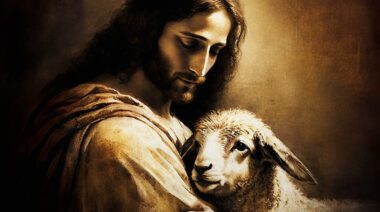


Tag: FaithHow do I know if God is talking to me in prayer?Q: Dear Father John, I keep hearing (and reading) that Christian prayer is a conversation with God. But, to be totally honest, when I pray I A: You are right: the phrase “conversation with God” describes Christian prayer beautifully. Christ has revealed that God is a real person, and that he is interested – passionately interested – in our lives, our friendship, our closeness. For Christians then, prayer, as Pope Benedict explained when he visited Yonkers, NY in 2007, is an expression of our “personal relationship with God.” And that relationship, the Holy Father went on to say, “is what matters most.” Parameters of Faith When we pray, God speaks to us in three ways. But to understand these three ways, we need a reminder. Our relationship with God is based on faith. Faith gives us access to knowledge that goes beyond what we can perceive by our senses. By faith, for example, we know that Christ is truly present in the Eucharist, even though our senses only perceive the appearances of bread and wine. Whenever a Christian prays, the prayer takes place within this atmosphere of faith. When I address God in vocal prayer, I know that he is listening to me, even if I don’t feel his presence with my senses or emotions. When I praise him, ask things of him, adore him, thank him, tell him I am sorry… In all these expressions of prayer, I know by faith (not necessarily by my senses or my feelings) that God is listening, interested, and that he cares. If we try to understand Christian prayer outside of this atmosphere of faith, we will get nowhere. Keeping that in mind, we can look briefly at the three ways God speaks to us in prayer. The Gift of Consolation In the first place, God can speak to us by giving us what spiritual writers call consolation. Through consolation, he touches the soul and allows it to be comforted and strengthened by a felt awareness of his love, his presence, his goodness, his power, his beauty… This consolation can flow directly from the meaning of the words of a vocal prayer. For instance, when I pray Blessed Cardinal Newman’s famous “Lead, Kindly Light..” prayer, God may boost my hope and my confidence, simply because the meaning of the words nourish and revitalize my awareness of God’s power and goodness. The consolation can also flow from the reflection and pondering involved in mental prayer. As I read and reflect slowly, prayerfully on the parable of the Prodigal Son, for example, I can feel my soul being comforted by that picture of the Father embracing the repentant younger brother. That picture of God’s love comes to my mind, and gives me a renewed awareness of God’s mercy and his goodness: “God is so merciful!” I think to myself, and I feel the warmth of his mercy in my heart. That image and those ideas are mine, insofar as they arise in my mind, but they are from God, insofar as they arose in response to my consideration of God’s revelation, in an atmosphere of faith. Or, on another occasion, I could meditate on the same biblical passage and be moved to a deep experience of sorrow for my own sins: in the ungrateful rebellion of the Prodigal Son, I see an image of my own sins and rebellions, and I am repelled by them. Again, the idea of the ugliness of sin and the feeling of sorrow for my personal sins are my own ideas and feelings, but they are a response to God’s action in my mind as he guides my mind’s eye to perceive certain aspects of his truth while I listen to him speaking through his revealed Word in the Bible. In any of these cases, my soul is touched anew, and thus nourished and consoled, by the truth of who God is for me, and who I am for him – a truth which God speaks to my soul. But the distinction between God’s speaking and my own ideas is not so clear as we would sometimes like. He actually speaks through the ideas that come as I turn my attention towards him in prayer. He speaks within my heart, within the words that form in my heart as I gaze at the Word. Nourishing the Gifts of the Holy Spirit In the second place, God can respond to us in prayer by increasing in our souls the gifts of the Holy Spirit: wisdom, knowledge, understanding, piety, fear of the Lord, fortitude, and counsel. Each of these gifts nourishes our spiritual muscles, so to speak; they build up our spiritual faculties. They make it easier for us to discover God’s will in our lives, to appreciate and want his will, and to carry out that will. In short, they enhance our ability to believe, to hope, and to love God and neighbor. During a time of prayer, then, when I am addressing God in vocal prayer, or seeking to know him more deeply through mental prayer, or adoring him through liturgical prayer, God’s grace touches my soul, nourishing it through increasing the power of these gifts of the Holy Spirit. Since these gifts are spiritual, and not material, and since God’s grace is spiritual, I will not always feel the nourishing take place. I may spend fifteen minutes reading and reflecting on the parable of the God Shepherd, and no consoling ideas or feelings are stirred up; my prayer feels dry. But that doesn’t mean that God’s grace is not nourishing my soul, that he is not strengthening within me the gifts of the Holy Spirit. When I take vitamins (or eat broccoli), I don’t feel my muscles grow, but I know that those vitamins are indeed enabling that growth. Likewise, when we pray, we know we are entering into contact with God’s grace, with a God who loves us and is making us holy. When I don’t experience consolation, I can be certain that God is still working in my soul, strengthening it with his gifts by means of the spiritual vitamins that my soul takes in whenever I have faith-filled contact with God. But I only know this by faith, because God doesn’t always send sensible consolation with this spiritual nourishment. This is why spiritual growth depends so significantly on our perseverance in prayer, regardless of whether we feel consolation. Direct Inspirations Thirdly, God can speak to our souls through words, ideas, or inspirations that we recognize clearly as coming right from him. Personally, I have a vivid memory of the first time the thought of the priesthood came into my mind. I wasn’t even Catholic yet. No one had told me that I should become a priest. And yet, in the aftermath of a powerful spiritual experience, the thought simply appeared in my mind, fully formed, with compelling clarity. I knew without any doubt that the thought had come directly from God, that he had spoken to me directly, giving me an inspiration. Most of us have had some, even if only a few, experiences like this, when we knew God was saying something specific to us, even though we heard the words only in our hearts, and not with our physical ears. God can speak in this way even when we are not at prayer. But a mature prayer life will make our souls more sensitive to these direct inspirations, and create more room for God to speak directly more often, if he wishes to do so. Jesus assured us that any effort we make in prayer will bring grace into our souls, whether we feel it or not: “Seek, and you shall find; ask, and it shall be given to you; knock, and the door will be opened” (Matthew 7:7-8). But at the same time, we have to always remember that we must live our entire lives, including our prayer lives, in the light of our faith, not only in accordance with what we perceive and with what we feel. As St. Paul said so powerfully, “We walk by faith, not by sight” (2 Corinthians 5:7). How can I learn to trust?Q: Dear Father John, I have felt a great desire to enter religious life for a few years now, but keep hitting an invisible wall so-to-speak. After attempting the Spiritual Exercises of St. Ignatius, the Lord helped me to see that I am not ‘indifferent’ and have to Where does one go from here? How does one learn to trust, to be grateful when you only see the failures and hurts in life, how does one surrender and become humble? Is it all a pure gift from God, or is there more I can do on Thank you for your wonderful blog which has been very fruitful! A: Reading this question gives me deep joy. The grace you have already received is so beautiful! I mean, the grace of understanding the core of the spiritual life (trust) and your need for deep, spiritual rehabilitation in that area. God has been speaking his wisdom to your soul!! You actually bring up at least three separate but related issues. I will comment briefly on them one by one. Trust: The Heart of Holiness First, and most importantly, you bring up the issue of trust. However much of the Spiritual Exercises you completed, you can be sure that it was fruitful. The Exercises allow us to confront in a powerfully intimate and personal way the fundamental, universal truths of the spiritual life. The universal truth that struck you the most is the very core of the Christian journey: the need for trust. Sin separates us and distances us from God. All sin – our own personal sins as well as the sins of others, both of which damage our souls – traces its origin back to the Fall of Adam and Eve (that’s why their sin is called “original sin”). What was the essence, the deepest core of their sin? We tend to think it was disobedience. Think again. You see, that disobedience was the trunk, but it grew out of an ever deeper root. Here’s how the Catechism puts it (#397): Man, tempted by the devil, let his trust in his Creator die in his heart and, abusing his freedom, disobeyed God’s command. This is what man’s first sin consisted of. All subsequent sin would be disobedience toward God and lack of trust in his goodness [emphasis added]. So rehabilitating trust in God is not only YOUR primary project for growth in holiness, but it is EVERY CHRISTIAN’S primary project! That’s not to belittle your journey. Your experiences in life, good and bad, have damaged your capacity to trust in God in a personal, unique way. Your mission in life, your vocation, your way of knowing, loving and serving God is also personal and unique. And so, the path you take to rehabilitate your trust in God will have certain twists and turns, certain epiphanies and setbacks, that will be entirely your own. But, in the end, re-learning to trust God is for each one of us the central, defining spiritual project. What To Do? Now we are ready to face the second issue you bring up: “Where does one go from here?” I detect frustration in your question. That’s totally understandable – but it’s also an indicator that something is askew. I think it has to do with expectations. You are wondering how you can develop trust when you don’t have much. You are wondering how to develop gratitude when you don’t have humility. You are wondering how to develop humility when you have formed such a strong and deep pattern of self-reliance. Let me answer your question with a question. Let’s pretend you don’t know how to play tennis, but you decide that you want to learn. How do you do it? How do you go from zero to beginner to intermediate to advanced? How do you develop the physical skills and coordination and muscle memory necessary for tennis, when you have none of those things? The answer, I think you will agree, is fairly simple. You learn to play tennis by playing tennis. Holy Tennis Growth in virtue (trust, confidence in God, surrender, humility, and gratitude) is similar. Virtues are moral habits, just as like skills are physical habits. They are developed under two conditions. First, we need to have the raw material. Future tennis players have to have the normal use of all the major muscle groups (you can’t play tennis without arms). Future saints have to have the normal use of human nature: “heart, soul, mind, and strength” as our Lord put it (Luke 10:27). From your question, it is clear that you have the raw material. Now you just need to begin to put it into action. Virtues are not developed “once and for all.” We can never check a virtue off our “to-do” list. We grow in trust, little by little, by trusting. We grow in humility, little by little, by exercising self-denial. We grow in gratitude, little by little, by saying thank you, sincerely and intentionally, over and over again, especially when we don’t feel like it. The sacraments nourish these efforts; prayer and spiritual reading/study informs and enlightens these efforts; the Holy Spirit – directly, through a spiritual director or mentor, through faith-based friendships, and through God’s Providence – will coach you. St. John of the Cross put it succinctly when writing about the virtue of love (which is the core of every virtue, so it applies equally to trust, humility, gratitude…): “Where there is no love, put love, and you will find love.” As long as you are patient, even the tiniest effort to trust God will give God’s grace a chance to touch your soul and strengthen the very trust that you are using. Remember, at Baptism you received sanctifying grace and the gifts of the Holy Spirit, and at Confirmation you received a strengthening of them. God is already at work in your life. He is drawing you closer to him. The journey will take your whole life, so don’t think that you have to make yourself perfect before God can do anything with you. On the contrary! God is already working in and through your life! Your desire to know and follow him better is already a clear sign that you are growing! Two Time-Tested Trust Workouts On a practical level, the saints all agree on two spiritual exercises that directly strengthen our capacity to trust God. First, meditating on Christ’s Passion. As we gaze on Christ “loving us to the end” (John 13:1), our fears are quelled and we realize, gradually, that even though everyone else may have betrayed us and wounded us and lost their trustworthiness, Christ will never betray us. He is worthy of our trust. No matter what happens, he will keep on loving us. That’s one of the core messages of the Passion. On this point, I would greatly encourage you to watch The Passion of the Christ, and go through it gradually, using Inside the Passion as a kind of study guide, or guide for meditating on this central mystery of our faith. Second, focus on discovering and embracing God’s will in the nitty-gritty of your daily life. We know what God’s will is through his Commandments, through the teachings of the Church, through the duties of our state in life, and through the circumstances of God’s Providence. Lord, what do you want me to do right now? That question, that prayer, is a powerful ally in your path of growing trust. Because every time we accept and embrace, and try to fulfill, God’s will, even with a fragile love and flimsy faith, we are actually exercising our trust in God. We are saying, “Okay Lord, I don’t really understand this completely, but I know that you want me to do it, so here goes…” That counts for simple tasks like washing the dishes. And it counts for more daunting tasks like talking about the faith or defending a Catholic position in a conversation at work. This is especially true when God’s will contradicts our natural preferences. That’s when we get to carry our own crosses, which is the privileged place for exercising, and therefore growing in, our trust in God. We have done some related posts on these issues that you may want to read or re-read: a two-part post on trusting in God, and a two-part post on discerning God’s will. If you keep those elements in play, you can be sure that you are making progress, regardless of how you may feel at any given moment. Follow Your Call!!! Finally, you mention at the beginning of your post that your trust issues have been “an invisible wall” in following what may be a vocation to the religious life. That may be a ruse of the devil. Being holy is not a requirement for entering religious life. In fact, a religious vocation, like any vocation, is actually, first and foremost, a specific path for growth in holiness. If your heart quickens at the thought of entering religious or consecrated life, you should act on it now. Visit religious congregations; speak with consecrated persons; keep taking whatever next step God puts in your mind until you discover your path. Don’t rush, but don’t delay! Maybe a good next step would be to finish the Spiritual Exercises retreat that you started (you mentioned that you “attempted” to do the Exercises – sounds like you didn’t finish!). If you like that idea, I can highly recommend my confreres’ who preach Spiritual Exercises Retreats here. In any case, if God has put that question in your heart, you can be sure that doing what you can to answer that question will help put you on the fast track to greater intimacy with him, and that’s what it’s all about. God bless you! What does it really mean to give your life to Christ and to trust God? Part II of II
Part II: Growing in Trust Part I of this series gave us a chance to reflect on the reasons why trust, confidence in God, is at the heart of the spiritual life. Now onto the more practical issues. Every Christian has two basic sectors in life: our contemplative sector, and our conquering sector. Contemplative The contemplative sector touches our interior life, our prayer life, our constant interior journey to discover and experience more and more deeply this boundless love, goodness, and trustworthiness of God. You have had a great jump start in this area since your search began – God has been guiding you along and moving you pretty quickly! So, in this sector, you simply need to keep moving. Keep praying, receiving the sacraments, going on retreats, doing spiritual reading… It’s very helpful in this regards to have some specific prayer commitments, and to have regular spiritual direction to receive guidance in prayer. Specifying these commitments is a great topic for spiritual direction. God’s will for you in this sector is to keep moving forward on the path that he has already led you to. And Conquering The conquering sector touches our exterior life, our mission of making a difference in the world, of imaging to those around us the very goodness of God that Christ reveals to us. This has to do with living the virtues and gifts of the Holy Spirit in your everyday life: honesty, purity, patience, generosity, service, forgiveness, responsibility, faithfulness, courage, self-denial… It’s about being the kind of wife, mother, friend, etc. that Christ wants you to be. It’s about following the commandments, and most especially the one that sums up all the other ones: “Love one another as I have loved you” (John 15:12). This can also overflow into activities directly dedicated to spreading the faith (we call this “apostolate”) – like starting a Bible study or organizing pilgrimages, etc… Eighty-five percent of the time, God’s will for you in this active sector is really, really obvious: he wants you to fulfill your responsibilities as a wife and mother, as a friend and parishioner, with sincerity, love, joy… Doing that really is doing his will. Think about the Blessed Virgin Mary and St Joseph during all those years when Jesus was growing up – and Jesus himself! They lived a very “normal” life from the world’s perspective, and that’s how they glorified God and grew in their friendship with him; God worked in hidden ways through their non-dramatic daily obedience, just as he makes crops grow little by little, in hidden ways, day after day. The other 15% of the time we have doubts about what God wants of us. This may be regarding big life decisions (where to life, what job to take, who to marry, what to do with a problem child, how to deal with an elderly parent who can no longer take care of themselves…), or it may be regarding individual, personal decisions: Should I go on my parish’s pilgrimage to Rome?… In these cases, we have to exercise the virtue of “prudence.” By prudence, we ask God for light, then we reflect calmly about the pros and cons of the different options, then we get good advice from people we trust, and we wait for the decision to become clear, listening to our hearts. As regards this conquering sector, it is very helpful to grow in self-knowledge through is called a program of life. You may want to consider doing a Spiritual Exercises retreat, during which retreatants develop programs of life. This is important because we sometimes get stuck in developing our trust in God because there are blocks in our emotional or intellectual lives that we don’t identify – experiences from our past that have left their mark, usually. Spiritual direction and a program of life are excellent tools to identify and gradually remove these hidden blocks. Frustration Doesn’t Come from God In your question, I detected some frustration, and maybe even impatience. Your desire to grow closer to God is so strong! This is a grace from God, and I am so glad you are grateful for it! But watch out – frustration and impatience don’t usually come from the Holy Spirit. You see, the spiritual life, our friendship with Christ, isn’t something that we ever finish. We can never check of “trust in God” from our to-do list. It is a journey that lasts our whole life long – and it is full of incredibly beautiful discoveries (and some painful ones too). God is rehabilitating our trust, little by little. When he’s done, he takes us home. He is the doctor of our souls, and healing always takes time. He is our personal trainer, and he knows what we need and when we need it, but we don’t always like taking the necessary time to allow his grace to produce results in our lives! So when you feel that frustration or impatience, ask yourself if, objectively speaking, there is more that God wants you to be doing. If you are making a decent effort (that’s all God needs from us) on both these fronts – contemplative sector and conquering sector – then rest assured that you are moving forward on this wonderful pilgrim path through earth to Heaven, and that God is pleased and excited to have you by his side! Yours in Christ, Father John Bartunek, LC, ThD What does it really mean to give your life to Christ and to trust God? Part I of II
Part I: The Role of Trust A: Yes, absolutely – “what it boils down to is trust.” That’s the very core of the spiritual life, of redemption, of friendship with Christ and the ever-growing happiness brought by that friendship. First, I want to try and explain a little bit about why trust is so central. Then in a second post I will try to address some of your practical concerns. The History of the Universe We have to start with the history of the universe (sorry). The first period was right after Creation. The human family was living in harmony with God, and therefore with nature and each other. Then the second period began: original sin destroyed that harmony and threw the human family into a fallen world, with a fallen human nature. Suffering, evil, betrayal, frustration, angst… It all started to spread after original sin. The original harmony was shattered, barely a memory. In this midst of this second period of the history of the universe, God decided to save us, to redeem us, to lead us back into his friendship, give us hope for everlasting fulfillment, and forge a new path to Heaven. How did he do it? That’s the story of the Bible, culminating in Christ’s incarnation, passion, resurrection, and establishment of the Church. When this second period is over, we will enter into the third period, the New Heavens and the New Earth, in which suffering and evil are banished forever. So, if you reflect on this a bit, you will see that the key to the drama is original sin. It separated us from God, and that separation is what Jesus came to reverse. In what did original sin consist? If we can understand that, then we will understand ourselves and our fallen nature, and also the path that Jesus set for our spiritual rehabilitation. The Black Box in Original Sin Here is what original sin consisted in, as explained by the Catechism, #397:
Did you get that? All sin, all rebellion against and alienation from God, originates in a lack of trust in God’s goodness. The meaning, interior peace, and fulfillment we long for can only come from living in friendship with God, which requires rehabilitating our trust in him. I could write an encyclopedia about this, but for now, let’s move on to Jesus and his role in our lives. God knew that he needed to regain our trust, and he chose to do so through the Incarnation. Jesus is the revelation, the definitive revelation, of God’s totally trustworthy goodness. Jesus is the manifestation of God’s limitless mercy, love, and passionate dedication to you. Jesus Reveals God’s Trustworthiness Did you ever wonder, for example, why Jesus had to suffer so much in order to save us? (Did you see The Passion of the Christ? His suffering was gargantuan!) It’s because he wanted to show us that there is absolutely no limit to his love for us, his mercy towards us. No matter what we do to him – scourge him, betray him, insult him, abandon him, crucify him, through our sins and selfishness – he still loves us; he will never give up on us. And no matter what other people may have done to us, Jesus understands, because he has been there, and so he can walk with us. That’s just one example of the revelation of God’s trustworthiness in Jesus. And so, the Christian life consists in walking with Jesus through each day and each season, and letting him win over our hearts, letting him teach us about his wisdom, goodness, and power, so that we gradually exercise more and more trust in him, thus rebuilding our friendship with God and the deep meaning and fulfillment that that friendship brings. Okay, so that’s why you are absolutely right when you say “what it boils down to is trust.” And I am so grateful to the Holy Spirit for having given you, through your prayer and reflection, that most important insight!!! In our next post we will talk about growing in trust. Yours in Christ, Father John Bartunek, LC, ThD What role does “experience” play in our life of faith? Is it bad?
A: This is one of the disadvantages of the blogosphere; you just can’t ever seem to explain yourself fully! I am pained at causing you confusion and internal turbulence. Let me see if I can clarify some things in order to start untying this knot. Different Kinds of Experience On the one hand, I fear that I am guilty as charged. I do council you against trusting too much in one particular kind of experience of God: emotional experience. As human beings, we have different levels of experience. We experience things on the level of our five senses, our instincts and passions (the drives and inclinations built in to our bodily nature), our emotions, our conscience, our intellect, and our will. These are different levels, but they are not entirely distinct; the human person is a wonderful harmony of physical and spiritual interaction. That’s how God designed us. But even though the different levels are not entirely distinct, not totally isolated from each other, there is a hierarchy of importance among them. Ordering Experience for Maturity To understand this, think about the term “maturity.” Infants are immature. They live only at the level of sense experience and instinct. They cry when they are hungry, cold, or uncomfortable. Children are a bit more mature. They are learning to govern their senses and their instincts, so they ask mom for a snack when they’re hungry, instead of crying. But they are still emotionally and spiritually immature. This is one of the reasons they can be so endearing, and so infuriating. They don’t know how to think and judge for themselves – they still need dad to hold their hands when they go out for a walk. Nor do they know what they are supposed to do with their emotions – they don’t understand why mom won’t let them watch a certain very enjoyable TV show; they can’t grasp how it could be bad for them if it is so enjoyable. A sign of maturity in an adult is consistent order among all the levels of human experience. Mature adults keep their senses, instincts, and emotions in harmony, guided by their reason and faith towards their true life-purpose: to know, love, and serve God, and to love their neighbors as themselves. They are like a master charioteer who is able to keep four different horses pulling together in harmony towards his worthwhile destination (to borrow an image from Plato). They don’t let strong passions or instincts, or waves of negative or positive emotions, or intellectual pride lead them away from the path of God’s will (the commandments, the responsibilities of their state in life, the inspirations of the Holy Spirit). The Place of Emotional Experience So we have different levels of experience, and the level of emotional experience is not the most important one. My emotions can be affected by all kinds of irrational factors: weather, biorhythms, other people’s offensive behavior… And so, if I guide my life by my emotions, I will inevitably be led astray; I will have an unstable life, like a dry leaf being blown around in the autumn breeze. This doesn’t mean that emotions are unimportant. God gave them to us, and without them we would be inhuman. The point is, we need to educate our emotions, just as infants need to learn how to govern instincts and passions. We need to understand that the experience of faith is rooted in a deeper place than our emotions; it is rooted in our minds and our wills. Our friendship with God is based on a spiritual recognition, which occurs under the influence of grace, that God is our Lord and Savior, that he is worthy of our love, reverence, and obedience. That recognition is an ongoing thing; it may begin with a powerful, born-again experience that involves not only our intellect and will, but also our emotions and our passions. It may be boosted and renewed periodically through powerful, emotionally charged experiences of God’s presence. But if God takes away those gratifying emotional experiences for a period, which could be long or short, that doesn’t alter the reality of the recognition, the reality of our experience of God’s majesty and goodness. Rather, he is teaching us to “walk by faith, not by sight” (2 Corinthians 5:7). All of this gets even more complicated when we remember that sin (both original and personal) has disrupted the harmony that should exist between the different levels of our human experience. Our senses, instincts, passions, emotions, and will often rebel against what our reason and faith show us to be true and good. Sometimes, in fact, our passions and emotions can pull us so strongly away from God’s will that we experience excruciating pain – think of Jesus in Gethsemane. He was taking our sin upon himself, and as a result his human nature entered into agony; it took intense prayer and heroic self-sacrifice for him to bring his whole human nature into harmony with his Father’s will. Our Present Plague Now, it is true that I have repeatedly cautioned against trusting too much in our emotional experience of God – at least, I have intended to do so. There is a specific reason for this. Our culture is consumeristic. That means we are constantly, daily, hourly, being bombarded by images, words, and jingles that are trying to convince us to buy something. Billboards, commercials, Web ads, radio ads, movie previews, spam, mass mailings – unless you live in a monastery (or go on retreat in one), you are positively besieged by consumer propositions. This is the air we breathe. Furthermore, what is the most effective way for these producers to convince you to buy their product? Is it by presenting you with a syllogism, an extended, rational defense of why you need a particular item and exactly how that item will add existential value to your life-experience? Hardly. The shortcut to your decision mechanism is through your instincts and emotions. A billboard doesn’t have time for syllogisms; it has to bypass your reason and grab you by manipulating your emotions, often subliminally. And so, from the time we were toddlers, we have been immersed in a cultural milieu saturated with expert emotional manipulation. As a result, we have been conditioned by this atmosphere to equate emotional experience with true value. This consumer conditioning has been further reinforced by the strong entertainment component that has emerged in our modern economies. Through technological developments, we have come to have much more time on our hands, which we tend to devote to entertainment, and entertainment (especially popular entertainment) stimulates, above all, the emotions. The result of this is simply that in our culture we tend to depend too much on emotional experience and too little on the deeper experience of faith, virtue, and spiritual truth. If something doesn’t give us an emotional return pretty quickly, we tend to dispose of it or disregard it. This is why, for example, Dan Brown’s books are read by millions, while Tolstoy and Sienkiewicz are truly treasured by dozens. This is why, for example, more than half of Internet traffic is directed to pornography Web sites. This is why, for example, it is so hard for most of us to spend 30 minutes in silence and prayer without distractions, and so easy to pay full attention to a two-hour Hollywood film. Stepping towards Maturity To actually grow in our relationship with God, therefore, we need to wean ourselves off an over-dependence on emotional experience. This doesn’t mean we should stifle emotional experience – that would be inhuman. Rather, we need to learn to govern our emotions instead of being governed by them. We need to learn to evaluate our lives, relationships, and activities not primarily according to how we feel on an emotional level, but according to what we know to be true on the level of our reason enlightened by our Catholic faith. This is the path to recover the true interior harmony that will enable us to experience the deeper satisfactions of spiritual experience, an experience which gradually brings our emotions into sync with our faith. This is the path to Christian joy and peace, which are so deep that they turn crosses into resurrections and so contagious that they turn victims into victors. I do not want to disparage emotional experience in our Christian journey: God also works through that experience. I only want to encourage spiritual maturity. And in a world like ours, that may require over-emphasizing, at least a little bit, the dangers of emotionalism. I hope this has helped to dispel your confusion. In future posts I will try to discuss more often the positive role that emotions can have in our spiritual life, so as to avoid giving the wrong impression that we should all become Puritans. Yours in Christ, Father John Bartunek, LC |
|
|