

Roman Catholic Spiritual Direction

Can people of non-Christian religions go to heaven? What does the Church say?

March 26, 2012 by  
Filed under Q and A, Salvation

Q:  Dear Father John, I am confused. Jesus said he is the way the truth and the light, but the Church has moved away from believing salvation lies only in the Church. Even learned people in the Church (my Spiritual Director included) now say that God is bigger than we can comprehend so we need to be open to the possibility that God is calling even those outside the Church. It makes the line very gray as to the purpose of evangelization. Can you comment? Thank you.

A: I hope that the answer to this question will be simpler than you might have thought. This question has generated reams of theological speculation, argument, and even bitter diatribes. In fact, it became so problematic back in the eighties and nineties that the Congregation for the Doctrine of the Faith, under the leadership of then Cardinal Joseph Ratzinger, actually published (with the full approval of Blessed Pope John Paul II) a thorough treatment of the issue, which you may want to read (give yourself some time and a full pot of tea; it is a rich, but somewhat long and somewhat dense). The document is called Dominus Iesus.

Christ and Bridges

The short answer to your question is this: Anyone who ends up in Heaven is a member of the Church. Heaven is communion with God, it is being a fully mature member of his family. The only bridge to Heaven is Christ – he is the only Savior, and only his self-sacrifice on the Cross opened the gates of Heaven and atoned for human sin. I believe that all the “learned people in the Church” you refer to in your question would agree with those statements. If they don’t, well, you will have to ask them to explain to you how they understand numbers 846 and 847 of the Catechism.

Now, in theory it is possible to cross a bridge without knowing the name of that bridge. You can even cross a bridge, in the fog, for example, without realizing that you are crossing a bridge. This is an image that can help us understand how a person could be saved, could enter heaven and become a full member of God’s family for all eternity, without being a Catholic here on earth. The condition for that, according to Church teaching, is that the person in question, through no fault of their own, “do not know the Gospel of Christ or his Church” but even so “seek God with a sincere heart, and moved by grace, try in their actions to do his will as they see it” (Catechism, #847).

Our Limits and Our Calling

Obviously, you and I are incapable of judging whether some are seeking God with a sincere heart, or whether their non-membership in the Catholic Church is “through no fault of their own.” Furthermore, through God’s Providence, we have come to know the name of the bridge; we have been given, by the sheer gift of God’s grace, the wisdom “for salvation through faith in Jesus Christ.” The greatest act of love we can make towards our neighbor is to share that faith with those haven’t yet received it, or who have lost it. As Pope Benedict XVI affirmed in his first public homily as Pope: “… the purpose of our lives is to reveal God to men… There is nothing more beautiful than to know Him and to speak to others of our friendship with Him.” This is the meaning behind what the Church has always called – and still calls – the “missionary mandate” (Catechism #849): “Having been divinely sent to the nations that she might be ‘the universal sacrament of salvation,’ the Church, in obedience to the command of her founder and because it is demanded by her own essential universality, strives to preach the Gospel to all men.”

Means vs Ends

The main point of recent discussion about these truths has to do more with the way we approach this missionary mandate, not its validity. Since the Second Vatican Council, the Church has made a concerted effort to reach out to people of other religions in a respectful way – respecting them as people, respecting the search for truth and salvation that their religion represents – and not with a condemning tone.

A few years ago, I wrote a couple of short essays on the subject of a Catholic’s view of non-Christian religions, and of non-Catholic Christians. They are available for reading and downloading here. You may want to read them over and reflect on them.

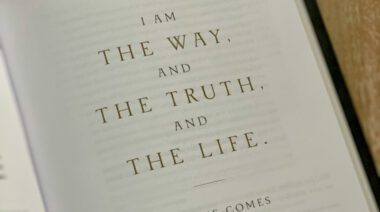
But make no mistake about it. Although we are called to respect all people and their search for religious truth, Jesus Christ alone remains the Way, the Truth, and the Life, and all salvation comes from him “through the Church which is his Body” (Catechism #846).

Print Friendly

About Fr. John Bartunek, LC

Fr John Bartunek, LC, S.Th.D, received his BA in History from Stanford University in 1990. He comes from an evangelical Christian background and became a member of the Catholic Church in 1991. After college he worked as a high school history teacher, drama director, and baseball coach. He then spent a year as a professional actor in Chicago before entering the religious Congregation of the Legionaries of Christ in 1993. He was ordained a Catholic priest in 2003 and earned his doctorate in moral theology in 2010. He provided spiritual support on the set of Mel Gibson’s The Passion of the Christ while researching the 2005 Catholic best seller, Inside the Passion, the only authorized, behind-the-scene explanation of the film. Fr John has contributed news commentary regarding religious issues on CNN, Fox, and the BBC. He has appeared on Larry King Live, Hannity, and the Laura Ingraham radio show. He also served as the English-language press liaison for the Vatican’s 2005 Synod of Bishops on the Eucharist. His most widely known book is called: The Better Part: A Christ-Centered Resource for Personal Prayer. He has also published two other titles: Meditations for Mothers and A Guide to Christian Meditation. Fr John currently resides in his Order’s General Directorate in Rome, where he is continuing his writing apostolate. His blog contains Q&A on the spiritual life at www.rcspiritualdirection.com.

please consider supporting our mission with a donation!

  • judeen

    the catholic church reconizes all christians baptized in the name of the Father and the son and the HOly Spirit… as christians and part of the church…. as Jesus said there are some sheep that are not my flock but I shall be there sheperd…. and they will follow me….. scriptures talk in revelations of the 7 churches …..and would not Jesus let people have the truth before judgement about Jesus and let them choose whether to follow Him or not? there is so much that we do not know.. ours is not to judge… there is also scripture about the people who even did miricles in His name yet when it came to shut the door the called out Lord Lord , and Jesus says I do not know you…. do not be to sure just because your in the faith your saved… or even Jesus does miricles for you….. always guard you heart that it Loves God and neighbor more than self

  • BMP1980

    Dear Fr.John , please correct me if I am wrong .The truth is that without Christ there is no salvation and unless a soul accepts Christ he/she will not be saved – christian or non christian.Maybe just maybe in case of non Christians who have not “found” Christ in their life on earth but have lived or have struggled to live a life as per the natural law,Christ may give them a chance to accept Him after their death.St Faustina’s revelations some how centers on the theme “Unfathomable Divine Mercy”. Though this obviously does not give anyone the excuse to ignore or reject Christ while still on earth. one thing is clear “All with Peter to Jesus through Mary!”    

  • danburke

    The dogma has not changed. This is merely an explanation of the dogma.

  • danburke

    Dear Kurt  – your comment does reflect accurately what Lewis depicts in TGD but it is important to note that as with orthodox Protestants/Evangelicals (which you know well) the Catholic Church does not teach that folks have a second chance after death. “It is given unto man once to die, then comes judgement…”

  • New Name

    Thanks for this Fr. John.  I particularly like the analogy of the bridge and the different ways of crossing the bridge.

    Jesus Christ is the way to God for everyone, period. 

    We know God is rich in mercy.  Just in human terms, someone who is merciful is going to take everything into account regarding a particular person’s situation.  How much greater is the mercy of God, who is infinite!  He alone knows the human heart.  So, someone who seeks God with a sincere heart certainly will be a recipient of His mercy, even if he does not know the name of Jesus.  Yes, it is only in His name can we be saved.  And, mercifully, God the Father has already spoken His Word once for all.  But, that does not mean we who know better are exempt from making that Word and the name of Jesus known and from bringing others more closely to Him that they might know Him more fully, and that they might have joy and have it to the full.

    The Catholic Church, as the pre-eminent vessel of his grace on earth, through the table of His Word and the Eucharist in the Mass, through the Sacraments and the Magisterium, through Scripture and through the treasury of graces from her prayers and good works as the Church Triumphant (in heaven), the Church Suffering (in purgatory) and the Church Militant (on earth), is responsible for guiding people into His own wonderful light.  It is through Her that God pours out grace and mercy throughout the world in every age.  It is an awesome and profound responsibility.

    Can God pour grace and mercy onto agnostics and atheists?  Yes.  He can and does!  But, it is what the Church does as the Body of Christ, as Christ’s representative here on earth, that actuates those graces and mercies upon the world.  That’s what Christ gave to Peter when he gave him the keys to the Kingdom of Heaven (in addition to the power to absolve sins).  The Mass makes present the saving act, the saving grace, of Christ’s passion, death and resurrection for our redemption and that of the whole world, here and now, yesterday, today and tomorrow.  Padre Pio was right when he said that the world could not exist without the Mass.  So it is that Jesus is the Way, the Truth and the Life for everyone and that no one comes to the Father except through Him.

  • danburke

    Dear Friend – this comment is a bit hyperbolic but I am sure you have heard it as you stated. The only way to overcome these kinds of responses are with love and patience. There are no logical arguments for these kinds of questions because the question is rooted in emotion, not facts. This is why I spend so much time traveling and speaking on “Apologetics of Extraordinary Love” – demonstrated, tangible love is the only way to reach someone who is struggling with these issues. Once that bridge has been built, truth will be able to pass over into their hearts.

    • New Name

      That reminds me of what Cardinal Martini once said, “The beauty that will win the world is the love that will share the pain.”

  • Father Thomas

    From the high school retreats that I run in Toronto, I can say this is a very commonly asked question among teens. I normally highlight just a couple principles when I talk about this. The first is that it is God’s Will that all people be saved. This is clearly stated in Scripture, and that therefore he has a plan for people who never had the opportunity to know Christ and his Church. The second principle I bring up is that everyone has a responsibility to seek the the truth and to live by it, that is seeking God with a sincere heart.

  • http://rcspiritualdirection.com/blog Mary@42

    A truly beautiful response, Dan. I believe one needs to be honest and agree the Catholic Church is THE CHURCH CHRIST FOUNDED and it is the Church where the Fullness of the Salvation Mystery subsists.  The Catechism of the Catholic Church addresses this question about salvation outside the Catholic Church very clearly. I believe the difficulty comes from those who find obeying the Teachings of the Catholic Church with fidelity too cumbersome and feel they can pick and chose what to obey and what to reject. And on this point the Prayer of the Act of Faith answers their misgivings.  Christ did not promise us an easy ride to Heaven. He calls each one of us to take up our Cross daily and follow Him.

  • http://www.facebook.com/profile.php?id=100000067803665 Judeen Harthun

    I have sat with the dieing,, and several have recounted their lives.. as they died.. saw angels and demons.. a lady who did not beleive fell flat on her desk… with no seemingly spiritual expereince.. each person seems to be judged at the time of death. … yet it is not the final judgement.. there will be a final judgement… when Jesus comes again… so I do beleive prayer for all souls are possible , we do it at all our masses.. the gift of beleif is just that a gift… we can not condemn those who dont… we leave that to God..
       and gays in school.. no.. I have a gay son… sex should not be promoted in school it does not make that person.. also , he will not go to church for he is not excepted.. this is a lie.. an excuse.. we are all sinners.. church is the place for us.. to grow and heal… church should be full people who need healing.. if you dont need healing why are you there? your perfect already…..

  • Pingback: SATURDAY MID-DAY EXTRA | ThePulp.it

  • danburke

    Well – the reason it is important is that, yes, we want to know the fullness of Christ ourselves, but we are also called to bring that same gift to others. If they will be just fine, no need to evangelize. If they won’t (and they won’t) we need to give all we can to bring this gift to them.

  • Roman Catholic Spiritual DirectionRoman Catholic Spiritual DirectionRoman Catholic Spiritual DirectionRoman Catholic Spiritual Direction