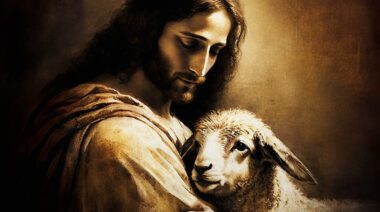


Month: February, 2012121. Listening Up (Mark 9:1-13)“Realize that in this life we are travelers on a journey: our true home is in heaven.” - St. Cajetan
Christ the Lord We glimpse through the eyes of Christ’s three closest disciples the true glory of this humble carpenter from the small town of Nazareth. The transfiguration of Christ on Mt Tabor unveils for a shining moment Christ’s divinity, so subtly disguised during the rest of his earthly days. In Jesus Christ, heaven and earth meet; time and eternity mingle. St Mark points out that the brilliance of Christ’s countenance, and even of his clothes, surpassed the brightest imaginable experience of earthly light. He conversed with God’s closest Old Testament collaborators, Moses and Elijah, whose law and prophecies had prefigured him. The entire scene culminates in the descent of a cloud (the Holy Spirit) and the voice of God the Father… Jesus Christ is more than just another rabbi; in him we behold the “fullness of grace and truth,” the “glory of the father,” and the face of everlasting love (cf. John 1, 3:16). And yet, at the same time, he is just plain Jesus, the rabbi from Galilee. Christ indeed is a Lord unlike any other, full of divine power but gentle as the humblest friend, as the Sacrament of the Eucharist so eloquently bears witness. Christ the Teacher When God the Father speaks from heaven, we ought to listen. No doubt he chooses his words carefully: “This is my beloved Son. Listen to him.” Throughout all of history, mankind has sought answers to the pressing questions that simmer deep within the human heart: Why are we here? How can we find the happiness we long for so desperately? Why is there suffering and evil? What is the ultimate meaning of existence? Often, as attested by the great literature of human history, man has addressed these questions directly to God, and God has responded. But his response is a surprising one: his answer is a living person, not a formulaic philosophy – the person of his “beloved Son,” Jesus Christ. Through Christ’s life, teachings, death, and resurrection, God has answered all our questions more thoroughly than we could ever have imagined. Christ himself is the answer. As Pope John Paul II put it in his first encyclical letter, “The Redeemer of man, Jesus Christ, is the center of the universe and of history” (Redemptor hominis, 1). By enjoining the three apostles to “listen to him,” the Father seems to imply that even though Christ is his beloved Son, not everyone will easily accept him. We hear a kind of plea in that command, a plea that should give us pause. Christ is the answer, but is he my answer? Do I listen to him? Do I follow him? He is the center of the universe, but is he the center of my life? The Father wants him to be – that’s why he sent him in the first place – but he leaves us free to make the choice. The apostles’ question to Jesus about Elijah exemplifies our tendency to misinterpret God’s action in our lives. They are finally convinced that Jesus is the Messiah, after years of following him, listening to him, seeing his miracles, and now witnessing the Transfiguration. But a question lingers in their minds. The ancient prophecies said that Elijah would return to announce the Messiah’s arrival. So, if Jesus is the Messiah, where is Elijah? Jesus reaffirms the prophecy (we know from other Gospel passages that St John the Baptist, who had come in the spirit of Elijah, fulfilled that prophecy), but then he turns his companions’ minds once again to his coming passion. He asks them a rhetorical question, as if to say, “True, the prophecy about Elijah was not so easy to understand, but if you didn’t grasp the meaning of that one, how will you grasp the meaning of my coming passion, which is also prophesied in the Old Testament?” Jesus tells them repeatedly about his coming passion and resurrection, but they are unable to understand; they simply don’t listen – the idea of suffering turns them off. How like us they are! Christ the Friend At times, God grants us exceptional clarity, joy, and satisfaction along our path of Christian discipleship. He does so because he knows that we need foretastes of the happiness he has in store for us if we are to endure the crosses that mark our way. But sometimes, like spoiled children, we hold on to those good feelings as if they were God himself. We echo Peter’s petition: “Lord, it is good for us to be here! Let’s just put up some tents and never leave!” But earth is not heaven, and God loves us too much to let us settle for anything less than the fullness of his friendship. And so, he leads us down from our high mountains and walks with us to Calvary, where he teaches us to love him and not just his gifts, to give of ourselves, and to store up our treasure in heaven. Christ in My Life Why do I take you for granted? You are too patient with me. Maybe I need a dramatic, Transfiguration-type experience to wake me up. I believe in you, Lord. I believe that you are the Eternal King, the Lord, the Son of God, the Second Person of the Holy Trinity. And I believe that you – the same Lord, God and Savior – are really and truly present in the Eucharist… I want to keep listening to you, Lord…. Please speak to my heart. Help me to know what you would have me say and do in each moment, in each relationship of my life. Make me like you, so that the right thing, the true thing, the fruitful thing is my natural preference in every situation. Thy will be done, Lord, in every corner of my life… You promises crosses, but you also promise resurrection. Get me ready for my crosses, because I want to experience the new life you won for me through your Resurrection. Teach me to die to everything that is selfish and petty, so that your grace and your life can flow through me and spread your Kingdom among everyone around me…
PS: This is just one of 303 units of Fr. John’s fantastic book The Better Part. To learn more about The Better Part or to purchase in print, Kindle or iPhone editions, click here. Also, please help us get these resources to people who do not have the funds or ability to acquire them by clicking here. Meditation: Mastering the Fundamentals – A Webinar with Fr. John BartunekDear Friends – I am pleased to announce that Fr. John Bartunek, author of The Better Part, will provide us Some of the questions he will answer will be:
River of suffering – St. John of the CrossAnd I saw the river over which every soul must pass to reach the kingdom of heaven and the name of that river was suffering: and I saw a boat which carries souls across the river and the name of that boat was love. Can special events be celebrated during Lent?Q: Dear Father John, I have a question… My brother’s graduation is this March during Lent and my family normally eats in a really nice restaurant for dinner after graduations. Is it okay if we aren’t able to fulfill our Lenten fast or penance on days like A: What a beautiful question! It shows that you are sincerely concerned about living Lent well. Since Lent is a season of special penance, prayer, and almsgiving (by which we prepare ourselves for the liturgy of our Lord’s Sacred Passion), you are wondering if it is possible to celebrate an important event without tarnishing the spiritual atmosphere of the season. I have three thoughts for you. Keep Fridays Well First, remember that we all abstain from meat on Fridays during Lent. This is a form of penance and self-denial that the entire Church engages in. We also take on personal penances and spiritual disciplines, but this is one we do as a Catholic family, united with all our brothers and sisters throughout the world, and throughout the centuries. So, if your graduation dinner were to take place on a Friday, you would actually need an official dispensation from this Lenten requirement in order to serve and eat meat. Time for Celebration Second, remember also that the Church has not removed all of its liturgical solemnities from the calendar during Lent. St. Joseph’s Day and the Annunciation often fall within Lent. Likewise, Sundays are still liturgical solemnities all throughout Lent (which is why Lent, which starts on Ash Wednesday and ends on Easter Eve, still has only 40 days – if you include the Sundays, it would be 46). On solemnities, the Church is able to celebrate the triumphs of our Lord without spoiling the Lenten atmosphere. Equilibrium over Legalism Third, if someone’s birthday or anniversary were to fall during Lent, that would be no reason to forego a celebration. I think the case you present is similar to those. The graduation is a real achievement, and ought to be celebrated. To have a special celebration in honor of the achievement is a good and just thing to do. You can celebrate wholeheartedly on that day, without giving up or compromising your Lenten disciplines of prayer and penance, and you may even be able to combine them. For instance, you could give the graduate a Lenten-esque graduation present, like a donation in his name to a Catholic orphanage or educational institution. That would show appreciation both for your brother’s achievement, and also for the spirit of self-sacrifice that Lenten almsgiving is meant to express and foster. I hope you can see that the mind of the Church in this matter always focuses on more than simply following specific external rules. It sets aside these weeks as a time to turn up the intensity of our quest for intimacy with God, our Creator, Savior, and Lover. If we followed all the “rules” perfectly, but didn’t engage actively in that quest, we would be missing the point. Lent is a season of spiritual renewal, of spring cleaning for the soul. The specific rules and practices that the Church requires and recommends are all meant to boost us in that primary, interior, and crucial spiritual adventure. I like dogs better than people, am I off base?Q: Dear Dan, I was telling a friend of mine the other day that I really prefer dogs to people. He told me that I needed to A: Dear Friend, just thinking about your conversation made me smile. In a strange twist of providence, I just happened to have read a lenten meditation written by a 19th century Jesuit priest. Before I offer his response, I must publicly affirm that I do believe dogs will be in heaven. Here’s what Fr. Gallwey has to say: “Some profess to have much love for our Lord, but a strong dislike for men. We hear them say that dogs and horses are much more loveable than Christians. Against such thoughts we must have ready the words of St. John who so well understood all about love: ‘He that loveth not his brother whom he seeth, how can he love God Whom he seeth not?’ (1 John iv) The love of God and love for men must both come down from heaven; and the ordinary rule is, that it is by loving men that we grow in love for God. Again, some who profess to love our Lord are very kind to one priest, to one church, to one nun, or to a very small select party of lay people, but cold and indifferent, if not harsh, to those outside of this narrow pale. One whose heart is becoming more like the heart of our Savior will, on the contrary, say: ‘I am partner (O Lord) with all them that fear Thee and keep Thy commandments.’ (Psalm cxviii) St. Paul’s heart became much like to our Lord’s; he therefore could weep with all who wept, and rejoice with those in joy. ‘Who is weak that I am not weak? Who is scandalized that I am not on fire?’ (2 Cor xi)” He then offers this prayer:
May you find a love for your humans that far surpasses your love for your dogs, and thereby, may you find a deeper love for God, and then find your home in heaven with all of them. |
|
|